Floor to Ceiling Large Tiles: A Modern Trend for Elegant Interiors
Interior design is increasingly moving towards clean lines, coordinated surfaces and spacious-looking interiors. One design approach gaining attention is the use of large-format tiles that extend across walls from floor to ceiling. Instead of dividing a wall into separate decorative sections, this style creates a continuous surface that makes the entire room feel more connected and thoughtfully designed.
Whether you are renovating a bathroom, designing a luxury living room, upgrading a kitchen or planning a contemporary commercial space, floor-to-ceiling tiling can create a striking architectural effect.
Large-format tiles are particularly appealing because their dimensions allow patterns, textures and natural stone-inspired designs to become more prominent. With fewer visible grout joints across a surface, the finished design can look cleaner and more seamless.
At HEMNIL Tiles Studio, we believe that thoughtfully selected surfaces can transform ordinary interiors into distinctive spaces. Let’s explore the floor-to-ceiling large tile trend, its benefits, design possibilities and important considerations before choosing tiles for your project.
What Is the Floor-to-Ceiling Large Tile Trend?
Floor-to-ceiling tiling refers to extending tiles across an entire wall, from the floor level or wall base to the ceiling, rather than stopping at a halfway point or using tiles only in selected sections.
When combined with large-format tiles, this approach creates a continuous visual effect with fewer interruptions.
For example, a bathroom can feature large marble-look tiles across the shower wall and other selected walls, while a living room can use a full-height stone-inspired tile feature behind the television or sofa.
The trend is not limited to one colour or material. It can include:
- Large marble-look tiles
- Natural stone-inspired surfaces
- Concrete-look porcelain tiles
- Travertine-inspired finishes
- Minimalist neutral tiles
- Textured decorative wall tiles
- Large-format contemporary patterns
The objective is to create a coordinated design in which the tile surface becomes an important part of the architecture.
Why Are Large-Format Tiles Becoming Popular?
Large-format tiles offer a different way to approach interior surfaces. Rather than using multiple smaller pieces to create a pattern, designers can use larger individual tiles to showcase the design across a wider area.
Here are some reasons homeowners and designers consider this approach.
1. Creates a Seamless and Spacious Appearance
One of the biggest visual advantages of large-format tiles is the reduced number of grout joints across a surface.
When fewer joints interrupt the design, the eye can follow the tile pattern more continuously. This can help a room feel more open and visually organised.
This effect can be especially attractive in compact bathrooms, apartments and open-plan living areas.
Design idea: Choose a light beige, ivory or soft grey stone-look tile and extend it across a full-height wall for a calm, spacious appearance.
2. Makes Walls Look More Architectural
A full-height tiled wall can become a defining architectural feature rather than simply a decorative background.
Large marble-inspired patterns, concrete textures and natural stone designs can give a wall a distinctive appearance.
Where it works well:
- Behind a living room television
- Behind a bathroom vanity
- Around a bathtub
- In a reception area
- Behind a hotel lobby counter
3. Highlights Natural Stone-Inspired Patterns
Large surfaces allow veining and natural-inspired patterns to become more visible.
Marble-look and stone-look tiles can create an elegant interior when their patterns are coordinated with furniture, lighting and other finishes.
For example, a large-format marble-look wall can complement a minimalist vanity, brushed-metal fittings and warm lighting.
4. Reduces the Number of Grout Joints
Compared with smaller tiles covering the same area, large-format tiles can require fewer grout joints.
Fewer joints can make the surface easier to maintain in some applications. However, grout joints remain an essential part of a properly installed tiled system and should not be eliminated or reduced beyond the manufacturer’s recommendations.
5. Creates a Luxury Interior Experience
A coordinated full-height tiled surface can make a space feel more considered and refined.
Rather than combining several unrelated finishes, you can create a consistent palette using one tile family, complementary formats and carefully selected accents.
This is particularly useful when designing modern homes, premium apartments, boutique hotels and commercial interiors.
7 Stylish Ways to Use Floor-to-Ceiling Large Tiles
The beauty of this trend is its flexibility. You can adapt the concept to different rooms and design styles.
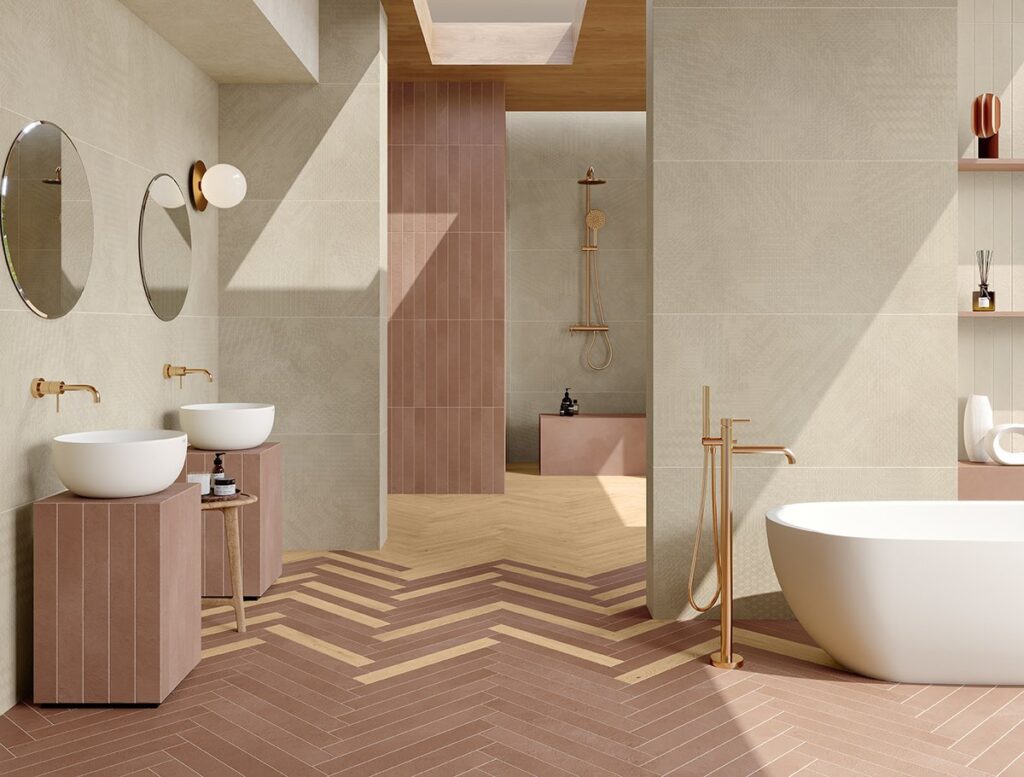
1. Floor-to-Ceiling Marble-Look Tiles in Bathrooms
Marble-look tiles are a popular choice for elegant bathroom interiors.
Large-format designs with subtle grey, beige or brown veining can create a sophisticated backdrop for modern bathroom fittings.
Consider extending the tile across the shower wall, vanity backdrop and other suitable bathroom wall surfaces.
Design recommendations:
- Choose a coordinated colour palette.
- Use a statement marble-look surface on a prominent wall.
- Pair the tiles with simple bathroom fittings.
- Consider warm lighting to complement beige and ivory tones.
For bathroom floors and shower floors, select products specifically suitable for wet-floor use. A polished wall tile should not automatically be assumed safe for a wet floor.
2. Large-Format Tiles for Living Room Feature Walls
A living room feature wall can change the overall character of an interior.
Instead of using paint or wallpaper alone, consider a full-height large-format tile surface behind the television or main seating area.
Stone-look, marble-look and concrete-look finishes can work well in contemporary living spaces.
Design recommendations:
- Use a large-format surface behind the television.
- Coordinate the tile colour with the flooring.
- Add subtle lighting to highlight the surface.
- Keep surrounding furniture and decoration balanced.
A carefully designed feature wall can become the focal point of the living room without making the entire space feel crowded.
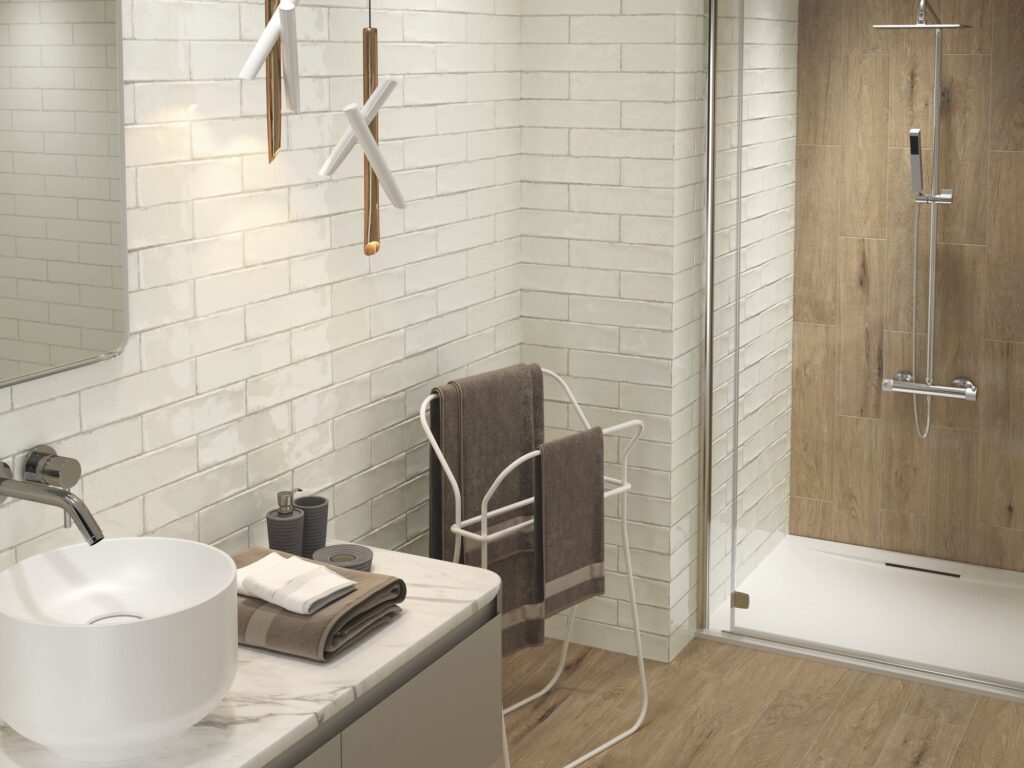
3. Floor-to-Ceiling Tiles for Modern Shower Areas
A full-height tiled shower wall creates a clean and coordinated appearance.
Large-format porcelain wall tiles can be considered for shower areas when the selected product is approved for that application and installed using the correct system.
The reduced number of grout joints can also simplify some cleaning routines, although the tile, grout, sealant and installation still require appropriate maintenance.
Design recommendations:
- Consider natural stone-inspired patterns.
- Coordinate shower walls with the rest of the bathroom.
- Use suitable waterproofing behind the tiled surface.
- Plan niches, shower fittings and drainage before installation.
Remember that tiles and grout do not replace a proper waterproofing system.
4. Large Tiles for Kitchen Walls and Backsplashes
Kitchen walls can benefit from large-format surfaces, especially when creating a contemporary and uncluttered appearance.
A large-format backsplash can provide a continuous backdrop behind the cooking or preparation area.
Marble-look, concrete-look and neutral stone-inspired finishes can complement modern kitchen cabinets.
Design recommendations:
- Coordinate the backsplash with the countertop.
- Consider easy-to-clean finishes for cooking areas.
- Plan electrical outlets and cabinet edges before installation.
- Check the selected product’s heat and stain suitability for the intended location.
5. Natural Stone-Look Tiles for Bedroom Interiors
Bedrooms are often designed around comfort, simplicity and a relaxing atmosphere.
Large-format stone-inspired tiles can be used on selected full-height walls to introduce texture and visual depth.
Warm beige, soft grey and neutral finishes can complement wooden furniture, upholstered headboards and soft lighting.
Design recommendations:
- Use a full-height feature wall behind the bed.
- Choose subtle patterns for a calm atmosphere.
- Coordinate the tile with flooring and furniture.
- Avoid combining too many competing decorative finishes.
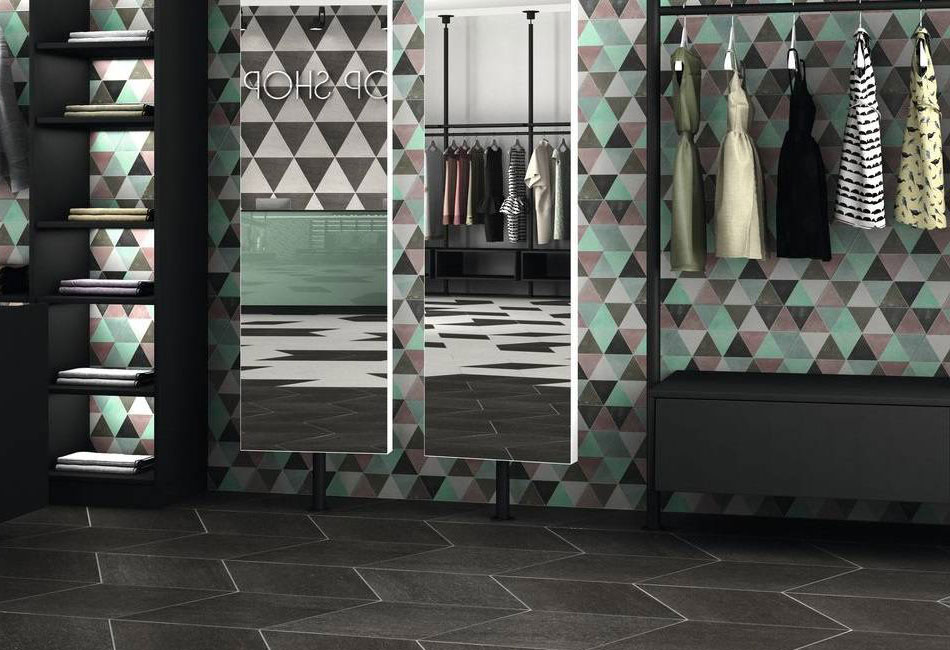
6. Full-Height Tiles in Commercial Interiors
Large-format tiles are not limited to residential projects. They can also help create a distinctive visual identity in commercial spaces.
Hotels, restaurants, showrooms, offices and retail environments can use full-height tiled walls to establish a consistent design language.
Possible applications include:
- Hotel reception walls
- Restaurant feature surfaces
- Retail showroom walls
- Office reception areas
- Hospitality bathrooms
- Commercial corridors
For high-traffic locations, the selected tile must meet the project’s requirements for durability, cleaning, installation and safety.
7. Indoor-Outdoor Design Continuity
Another interesting way to use large-format tiles is to create a visual connection between indoor and outdoor areas.
For example, a living room opening onto a balcony or terrace can use coordinated tile colours and patterns to create a connected design.
However, the indoor and outdoor products may need different surface finishes and technical properties.
Design recommendations:
- Coordinate the colours across both areas.
- Select an outdoor-rated product for exterior use.
- Check slip performance and weather suitability.
- Plan drainage, movement joints and installation details.
A coordinated appearance does not mean using the exact same tile specification everywhere.
Which Tile Colours Work Best for Floor-to-Ceiling Designs?
Colour plays an important role when tiles cover a large surface. The right shade can make the design feel calm, bold, warm or dramatic.
White and Ivory
White and ivory tiles create a bright, clean appearance. They work particularly well in bathrooms, kitchens and minimalist living spaces.
Beige and Cream
Warm neutral shades can create a welcoming atmosphere. They complement natural wood, warm lighting and contemporary furniture.
Grey and Concrete Shades
Grey tiles offer a modern architectural appearance. They work well in contemporary apartments, commercial interiors and minimalist spaces.
Brown and Earthy Shades
Earth-inspired colours can bring warmth and a natural character to interiors. Consider them for living rooms, feature walls and selected hospitality spaces.
Dark Charcoal and Black
Dark large-format tiles can create a dramatic and luxurious effect. They are particularly effective on selected feature walls, especially when balanced with suitable lighting.
How to Choose the Right Large-Format Tiles
Before selecting large-format tiles, consider more than just the design. The size, material, finish and installation requirements all affect the final result.
1. Consider the Room Dimensions
Large-format tiles can create a continuous appearance, but the layout should be planned around the actual dimensions of the room.
Consider wall height, wall width, door openings, windows, corners and plumbing fixtures.
A professional layout plan can help reduce unnecessary cuts and improve the finished appearance.
2. Select the Right Material
Different tile materials have different characteristics.
Porcelain, ceramic, natural stone and other surface materials should be compared according to their intended application, technical specifications and maintenance requirements.
Do not assume that every large-format product is suitable for every floor or wall.
3. Choose the Appropriate Finish
Glossy, polished, matte and textured surfaces create different visual effects.
For example:
- Polished finishes can create a reflective and elegant wall surface.
- Matte finishes can create a softer, understated appearance.
- Textured finishes can introduce visual depth.
- Natural stone-inspired surfaces can create an organic look.
For wet floors, check the manufacturer’s declared slip-performance information and intended-use guidance rather than choosing based on appearance alone.
4. Plan the Grout Colour
Grout colour can influence how continuous the finished surface looks.
A grout shade close to the tile colour can make joints less visually prominent, while a contrasting shade can emphasise the tile layout.
Always follow the recommended joint width and grout specifications.
5. Check Installation Requirements
Large-format tiles require careful handling and installation.
Important considerations include:
- Substrate strength and flatness
- Correct adhesive selection
- Appropriate coverage and bedding
- Tile handling and lifting equipment
- Cutting and edge finishing
- Joint width and movement joints
- Waterproofing where required
For very large or heavy wall tiles, the installer must also check whether additional support or mechanical fixing is required by the product specifications and applicable installation standards.
Common Mistakes to Avoid with Large-Format Tiles
A beautiful design can be affected by poor planning. Avoid these common mistakes:
1. Choosing tiles without checking the application
A wall-only tile should not be used on a floor unless the manufacturer specifically approves it.
2. Ignoring the wall or floor substrate
Large-format tiles need a suitable, properly prepared installation surface.
3. Skipping waterproofing
In wet areas, waterproofing must be planned as part of the complete installation system. Tiles and grout alone are not waterproofing.
4. Using unsuitable grout joints
Do not reduce joint widths simply to achieve a seamless appearance. Follow the manufacturer’s installation instructions and applicable standards.
5. Ignoring the lighting
Large surfaces can look different under natural and artificial light. Review samples in the actual room wherever possible.
6. Not planning cuts and transitions
Doors, corners, niches, windows and plumbing fixtures should be considered before installation begins.
7. Selecting a floor tile based only on appearance
For wet or outdoor areas, check the product’s suitability and declared slip performance.
Why Explore Premium Tile Collections at HEMNIL Tiles Studio?
Choosing tiles is an important part of creating a distinctive interior. The right surface should complement the architecture, furniture, lighting and intended use of the room.
At HEMNIL Tiles Studio, homeowners, architects, interior designers and developers can explore premium and designer surface collections for residential, hospitality and commercial projects.
Our website features different surface categories, including:
- Floor and wall tiles
- Imported tile collections
- Mosaic surfaces
- Cladding and brick finishes
- Wallpapers and murals
- Glass blocks
- Washbasins
- Pool tile collections
Whether you are planning a full-height bathroom wall, a large living room feature surface or a coordinated interior design, the HEMNIL team can help you explore suitable design options.
Explore the HEMNIL Products Collection and discover more about our premium tile collections.
Transform Your Interiors with Floor-to-Ceiling Large Tiles
The floor-to-ceiling large tile trend offers a fresh way to design modern interiors. By extending coordinated surfaces across full-height walls, you can create elegant bathrooms, striking living room features, contemporary kitchens and sophisticated commercial spaces.
From marble-inspired patterns and natural stone textures to minimalist neutral finishes, large-format tiles offer many possibilities for creating a distinctive interior.
The most successful design is one that balances appearance with practicality. Consider the room’s requirements, select the appropriate tile specification and work with experienced installation professionals to achieve the intended result.
If you are exploring premium and designer tiles in Bangalore, connect with HEMNIL Tiles Studio to discuss your project.
Visit HEMNIL Tiles Studio
#7/21, Ground Floor, Sankey Road, Lower Palace Orchards, Sadashivanagar, Bengaluru – 560003, India
Phone: +91 9148373070
Website: https://www.hemnil.com/
Frequently Asked Questions
1. What are floor-to-ceiling tiles?
Floor-to-ceiling tiles are tiles installed across the full height of a wall, extending from the floor or wall base to the ceiling. They create a continuous surface and can be used in bathrooms, kitchens, living rooms and commercial interiors.
2. Are large-format tiles suitable for small bathrooms?
They can be suitable for small bathrooms when the tile size, layout and installation conditions are properly planned. Fewer grout joints can create a more continuous visual appearance, but cutting, access and drainage details need consideration.
3. What are the benefits of large-format tiles?
Large-format tiles can create a seamless appearance, showcase patterns across wider surfaces and reduce the number of visible grout joints. Their suitability depends on the product and installation location.
4. Can large-format tiles be used on bathroom walls?
Yes, provided the selected product is approved for wall installation and is installed using the correct adhesive and substrate preparation. Wet-area waterproofing must also be addressed.
5. Are floor-to-ceiling tiles suitable for living rooms?
Yes. Large-format tiles can be used to create full-height feature walls behind televisions, seating areas and other architectural elements.
6. Do large-format tiles require special installation?
They often require more careful handling, substrate preparation, adhesive selection, levelling and installation planning than smaller tiles. Professional installation is recommended.
7. Which colour is best for large-format tiles?
White, ivory, beige, grey, brown and charcoal are all popular design options. The best colour depends on the room’s lighting, furniture, dimensions and overall design theme.
8. Are large-format tiles easier to maintain?
Fewer grout joints can make some surfaces easier to clean, but maintenance depends on the tile material, finish, grout, location and cleaning recommendations.
9. Can the same large-format tile be used indoors and outdoors?
Not automatically. Outdoor areas may require different surface finishes, slip performance and weather suitability. Choose products specifically approved for each application.
10. Where can I explore designer tiles in Bangalore?
You can visit HEMNIL Tiles Studio in Sadashivanagar, Bangalore, to enquire about its premium and designer tile collections and discuss suitable surface options for your project.