Elevate Your Bathroom Design: 8 Timeless Wall Tile Ideas
A beautifully designed bathroom is more than a functional space. It is a personal retreat where thoughtful materials, colours and textures come together to create an atmosphere of comfort and elegance. Among the many elements that influence bathroom interiors, wall tiles play an especially important role.
The right bathroom wall tiles can transform an ordinary space into a sophisticated interior. Whether you prefer the timeless elegance of marble, the natural beauty of stone, the subtle character of textured surfaces or the decorative appeal of mosaics, there are countless ways to create a bathroom that reflects your style.
Bathroom wall tiles also serve a practical purpose. They help protect wall surfaces in areas exposed to moisture and splashes, and suitable tile finishes can make routine cleaning easier.
For homeowners, architects and interior designers planning a new bathroom or renovation, selecting the right tiles involves balancing appearance, material suitability, maintenance and installation.
At HEMNIL Tiles Studio, we believe that beautiful surfaces can make everyday spaces feel exceptional. Here are eight timeless bathroom wall tile ideas to inspire your next project.
Why Are Bathroom Wall Tiles Important?
Bathroom walls experience regular exposure to moisture, steam, splashes and cleaning products. Choosing suitable wall tiles helps create a practical surface while establishing the visual character of the room.
Here are some reasons why wall tile selection matters.
1. Protection Against Everyday Moisture
Appropriately selected and correctly installed wall tiles help protect bathroom wall surfaces from everyday water exposure. Wet areas still require a properly designed waterproofing system behind the tiles.
2. A Beautiful Interior Finish
Wall tiles can become the defining visual feature of a bathroom. Their colours, textures, patterns and layouts influence how the entire space feels.
3. Easier Everyday Cleaning
Suitable glazed ceramic and porcelain tiles generally offer practical, easy-to-clean surfaces. The grout, surface texture and cleaning products used will also influence maintenance.
4. More Design Flexibility
From large-format marble-look tiles to small decorative mosaics, modern collections offer a variety of options for different bathroom sizes and styles.
5. A More Coordinated Bathroom
Matching or complementing wall tiles with floor tiles, vanity finishes, mirrors and fittings helps create a cohesive interior.
8 Timeless Bathroom Wall Tile Ideas
The best bathroom design is not necessarily the one following the latest trend. Timeless materials, thoughtful colour combinations and balanced layouts can remain visually appealing for many years.
Explore these eight bathroom wall tile ideas.
1. Marble-Look Wall Tiles for Timeless Luxury
Marble has long been associated with elegant architecture and sophisticated interiors. Its natural veining, tonal variations and refined appearance make it a popular choice for luxury bathrooms.
Marble-look porcelain tiles offer an alternative for homeowners who appreciate the appearance of natural marble but prefer a more consistent and generally lower-maintenance surface.
Why Choose Marble-Look Bathroom Tiles?
- Elegant veining creates visual interest.
- Light marble designs can make a bathroom feel brighter.
- Large formats can create a more continuous appearance.
- Different vein patterns complement both classic and modern interiors.
- Porcelain options are available in finishes suitable for bathroom walls.
Design Ideas
White marble with grey veins: A classic combination that works beautifully with white sanitaryware, chrome fittings and neutral vanities.
Beige marble-inspired finishes: Create a warm and welcoming atmosphere, particularly when paired with wooden cabinetry and soft lighting.
Dark marble designs: Add drama and contrast to contemporary bathrooms. Use them selectively if the bathroom has limited natural light.
Bookmatched marble-effect walls: Matching vein patterns across adjacent slabs can create a striking feature behind a freestanding bathtub or vanity.
Best Placement
- Behind the bathroom vanity.
- Around a freestanding bathtub.
- Across a full-height shower wall.
- On a feature wall in a master bathroom.
For natural marble, confirm the stone’s suitability, sealing requirements and maintenance routine. Marble-look porcelain generally requires a different care approach.
2. Natural Stone-Look Tiles for an Organic Bathroom
Natural stone-inspired tiles bring an earthy and calming quality to bathroom interiors. Their appearance can complement modern, rustic, minimalist and luxury design styles.
Stone-look porcelain can recreate the visual character of materials such as limestone, travertine and slate while offering the practical qualities of porcelain.
Popular Stone-Inspired Looks
Limestone look: Soft beige and cream tones create a relaxed, understated interior.
Travertine look: Warm tonal variation adds depth and a natural character.
Slate look: Darker shades and layered patterns create a more architectural appearance.
Sandstone look: Earthy colours can make a bathroom feel warm and inviting.
Design Ideas
Use stone-look tiles across the main bathroom walls and combine them with a complementary floor finish. Add timber-effect cabinetry, simple mirrors and warm lighting to create a balanced natural-inspired interior.
For a more luxurious result, consider using large-format stone-look porcelain behind the vanity or bathtub.
Best Placement
- Master bathroom walls.
- Shower enclosures.
- Vanity feature walls.
- Contemporary spa-inspired interiors.
Natural stone and stone-look porcelain are different materials. Check the technical and maintenance requirements of the exact product before selecting it for wet areas.
3. Textured Wall Tiles for Depth and Dimension
If you want to create a distinctive bathroom without relying on bold colours, textured wall tiles are an excellent design option.
Textured tiles introduce subtle depth, shadows and visual movement. Depending on their design, they may have ribbed, fluted, carved, linear or three-dimensional surfaces.
Why Textured Tiles Work
- Add depth to otherwise simple walls.
- Create interesting effects under bathroom lighting.
- Complement plain tiles and minimalist fittings.
- Introduce a decorative feature without excessive colour.
- Help define selected zones within a bathroom.
Design Ideas
Vertical fluted tiles: Vertical lines can visually draw attention upwards and create an elegant feature behind a vanity.
3D geometric tiles: Repeating shapes create a contemporary architectural appearance.
Ribbed neutral tiles: Soft beige, cream and grey finishes add texture without making the room feel too busy.
Stone-textured tiles: Combine natural-inspired patterns with dimensional surfaces for a more organic design.
Best Placement
- Vanity backdrop.
- Bathtub feature wall.
- Decorative shower wall.
- Selected sections of a contemporary bathroom.
Consider how the tile will be cleaned. Deep grooves and pronounced textures may collect soap residue and require additional attention.
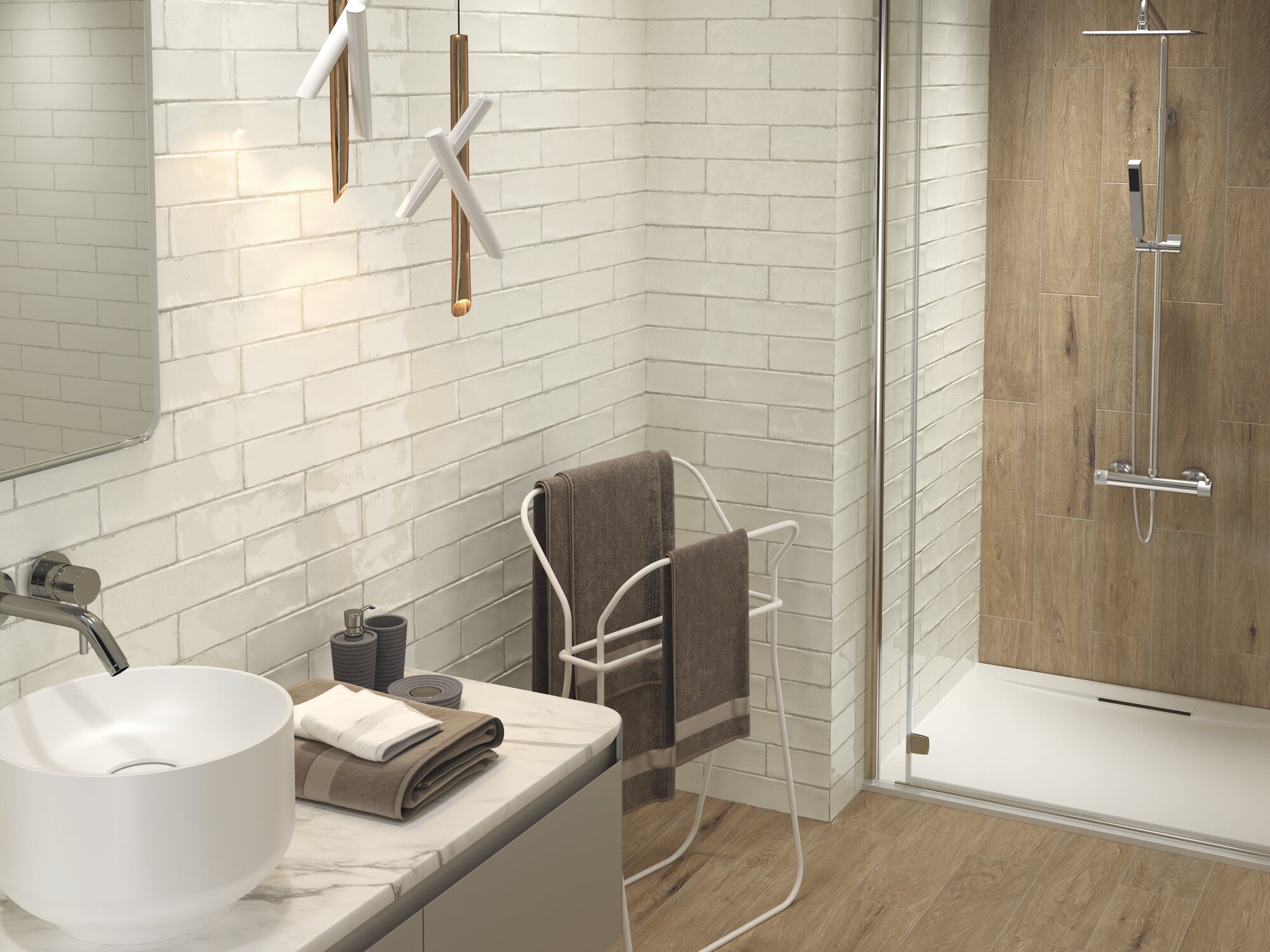
4. Subway and Metro Tiles for Classic Appeal
Subway tiles, also known as metro tiles, are among the most recognisable wall tile styles. Their simple rectangular shape makes them versatile and suitable for a variety of bathroom designs.
Although traditionally associated with white brick-style layouts, modern metro tiles are available in different colours, sizes and surface finishes.
Popular Subway Tile Layouts
Traditional brick bond: Each row is offset from the previous one, creating a familiar classic appearance.
Vertical stack: Tiles are aligned vertically to create a clean and contemporary look.
Horizontal stack: Straight horizontal lines produce a simple, orderly finish.
Herringbone layout: Rectangular tiles are arranged in a V-shaped pattern to add movement and character.
Contrasting grout: A contrasting grout colour can emphasise the tile layout and create a more graphic appearance.
Colour Ideas
- White metro tiles for a timeless bathroom.
- Soft green tiles for a fresh, natural atmosphere.
- Navy blue tiles for a dramatic accent.
- Beige tiles for warm, understated interiors.
- Glossy black tiles for contemporary contrast.
Best Placement
- Vanity splashback.
- Shower walls.
- Half-height bathroom walls in suitable dry zones.
- Guest bathroom feature walls.
Metro tiles work particularly well when paired with simple mirrors, understated fittings and complementary floor tiles.
5. Mosaic Wall Tiles for Decorative Detail
Mosaic tiles are made from small individual pieces arranged in decorative patterns or sheets. They offer excellent creative flexibility and can introduce colour, detail and texture into bathroom interiors.
Mosaics are available in different materials and styles, including glass, ceramic, porcelain and natural stone.
Why Choose Mosaic Tiles?
- Suitable for intricate decorative patterns.
- Available in a wide range of colours and shapes.
- Useful for smaller feature areas.
- Can complement large-format wall tiles.
- Can be used to highlight architectural details.
Popular Mosaic Designs
Glass mosaics: Reflect light and can create a bright, decorative appearance.
Hexagon mosaics: Introduce geometric interest and work well as feature panels.
Penny round mosaics: Small circular pieces create a distinctive decorative finish.
Stone mosaics: Bring natural texture and colour variation into bathroom interiors.
Metallic mosaics: Can add a decorative accent when used thoughtfully.
Design Ideas
Instead of covering every wall with mosaics, consider using them as a feature behind the vanity, inside a shower niche or around a selected architectural detail.
Combining a decorative mosaic with plain porcelain or ceramic tiles helps maintain balance.
Best Placement
- Vanity backdrop.
- Shower niche.
- Decorative border.
- Bathtub feature area.
- Selected bathroom accent walls.
For shower floors, choose only mosaics specifically suitable for floor use and the expected wet conditions. Wall mosaics should not automatically be assumed suitable for walking surfaces.
6. Geometric and Patterned Tiles for a Distinctive Bathroom
Geometric tiles can bring personality and structure to bathroom interiors. Their patterns may be simple and understated or bold and decorative.
Popular shapes include hexagons, diamonds, chevrons, squares and repeating geometric motifs.
Why Choose Geometric Wall Tiles?
- Introduce visual interest.
- Create a focal point without additional decoration.
- Complement contemporary and traditional interiors.
- Allow creative colour combinations.
- Help define specific bathroom zones.
Design Ideas
Subtle geometric patterns: Choose neutral shades and repeating shapes for an elegant finish.
Black-and-white patterns: Create contrast and a timeless graphic appearance.
Soft pastel geometry: Use muted greens, blues and beige tones for a relaxed atmosphere.
Decorative feature panels: Keep the surrounding walls simple so the patterned surface becomes the focal point.
Best Placement
- Behind the vanity.
- Above a bathtub.
- On a selected shower wall.
- In guest bathrooms and powder rooms.
For long-term appeal, consider using patterned tiles selectively rather than covering every surface with competing designs.
7. Neutral and Earthy Wall Tiles for a Calm Bathroom
Neutral and earthy colours have a lasting place in bathroom design because they work well with different materials, lighting conditions and interior styles.
Beige, cream, taupe, warm grey and soft brown tones can create a calm and welcoming atmosphere.
Popular Neutral Colour Combinations
Beige and white: A bright, warm and timeless combination.
Taupe and cream: Adds subtle depth without creating strong contrast.
Warm grey and wood: Balances contemporary finishes with natural character.
Sand and stone: Creates an organic, spa-inspired appearance.
Ivory and brushed metal: Produces an elegant and understated bathroom.
Design Ideas
Use a warm neutral wall tile as the main finish, then introduce contrast through the vanity, mirror frame, taps and lighting.
Large-format tiles can help create a more continuous appearance, while a small decorative panel can add personality.
Best Placement
- Full bathroom walls.
- Master bathrooms.
- Guest bathrooms.
- Spa-inspired interiors.
- Contemporary minimalist spaces.
Neutral does not have to mean plain. Subtle veining, tonal variation and surface texture can make a neutral bathroom feel rich and layered.
8. Large-Format Wall Tiles for a Seamless Modern Look
Large-format bathroom tiles are an excellent option for creating a clean, sophisticated appearance.
Because larger tiles can reduce the number of visible grout joints, they can make a bathroom wall appear more continuous.
Benefits of Large-Format Bathroom Tiles
- Create a spacious visual effect.
- Reduce the number of grout joints.
- Highlight marble and stone-inspired patterns.
- Work well in contemporary bathrooms.
- Provide a refined finish across larger wall surfaces.
Popular Large-Format Designs
Marble-look slabs: Create a luxurious appearance behind a bathtub or vanity.
Concrete-look tiles: Complement minimalist and industrial-inspired interiors.
Stone-look porcelain: Bring natural-inspired surfaces into modern bathrooms.
Plain neutral tiles: Create a calm backdrop for decorative fittings and accessories.
Installation Considerations
Large-format tiles require careful planning and experienced installation.
Consider wall flatness, tile weight, adhesive compatibility, handling, cutting, joint alignment and the manufacturer’s fixing recommendations.
The correct substrate and installation system are particularly important in wet areas.
How to Choose the Right Bathroom Wall Tiles
After exploring different styles, the next step is selecting tiles that suit the bathroom’s size, lighting, layout and everyday use.
1. Consider the Bathroom Size
The dimensions of the bathroom influence how different tile sizes and colours will look.
For compact bathrooms, light-coloured tiles and simple patterns can create a more open appearance. Large-format tiles may also reduce visual interruptions, provided they are suitable for the wall layout.
Larger bathrooms provide more opportunities to combine different formats and feature surfaces.
2. Choose the Right Colour Palette
The colour of the wall tiles should complement the floor, vanity, sanitaryware, mirrors and fittings.
Before making a decision, consider the natural light and artificial lighting available in the bathroom.
Warm shades can create a comfortable atmosphere, while cool tones can produce a fresh and contemporary appearance.
3. Select Suitable Materials
Common bathroom wall tile materials include:
- Ceramic: Available in a wide range of colours, shapes and glazed finishes. Often suitable for bathroom wall applications.
- Porcelain: Offers a dense, low-water-absorption body and a broad selection of designs.
- Natural stone: Provides unique natural variation but may require sealing and specialised maintenance.
- Glass mosaics: Useful for decorative features and selected wet-area applications when the product is approved for the intended use.
The right material depends on the location, design, budget and maintenance expectations.
4. Think About Surface Finish
Glossy tiles can reflect light and create a bright appearance. Matte finishes offer a softer visual effect, while textured tiles introduce depth.
For bathroom walls, several finishes may work depending on the design and cleaning requirements. For bathroom floors, select a finish specifically suitable for wet foot traffic.
5. Plan the Tile Layout
The same tile can look completely different depending on how it is installed.
Consider brick bond, vertical stack, horizontal stack, herringbone and other layouts before purchasing.
Ask your installer to prepare a layout plan for decorative patterns and feature walls.
6. Coordinate Wall and Floor Tiles
Wall and floor tiles do not need to match exactly. They should, however, work together visually.
You could combine marble-look wall tiles with a complementary matte floor finish, or use neutral wall tiles with a decorative mosaic accent.
Always select a floor product suitable for the expected wet conditions and foot traffic.
7. Consider Grout Colour
Grout is an important part of the finished design.
Matching grout can create a more continuous appearance, while contrasting grout highlights individual tile shapes and layouts.
Choose grout appropriate for the application and follow the manufacturer’s cleaning and maintenance recommendations.
Bathroom Wall Tile Maintenance Tips
Proper maintenance helps preserve the appearance of bathroom wall tiles and grout.
Clean Regularly
Use a suitable tile cleaner and a soft cleaning cloth or sponge. Remove soap residue and water deposits before they build up.
Pay Attention to Grout
Grout joints can collect dirt and moisture over time. Clean them using products recommended for the particular grout type.
Avoid Harsh Chemicals
Certain acidic or abrasive cleaning products can damage natural stone, decorative surfaces, grout and metal trims. Check the tile manufacturer’s cleaning instructions before using a new product.
Keep Bathroom Ventilation Adequate
Good ventilation helps manage humidity and condensation. Use an appropriate exhaust fan or ventilation system to help keep the bathroom environment comfortable.
Inspect Wet Areas
Check corners, joints, sealants and other vulnerable areas periodically. Repair damaged grout or sealant where necessary to help maintain the integrity of the installation.
Common Bathroom Wall Tile Mistakes to Avoid
Before finalising your bathroom tile design, avoid these common mistakes:
- Choosing tiles only by appearance: Check material suitability, maintenance and technical specifications.
- Using too many patterns: Combining several strong designs can make a small bathroom feel visually crowded.
- Ignoring lighting: Tile colours and finishes can look different under warm, cool and natural light.
- Selecting unsuitable wall tiles for floors: Wall-only products should not be installed on floors unless the manufacturer specifically approves them.
- Ignoring waterproofing: Tiles and grout are not a substitute for a properly designed waterproofing system.
- Choosing difficult-to-clean textures: Deep surface details can collect soap residue and dirt.
- Overlooking grout colour: Grout can significantly change the final appearance of a tiled wall.
- Skipping layout planning: Poor alignment around niches, windows, corners and fittings can affect the finished result.
Create a Beautiful Bathroom with HEMNIL Tiles Studio
A thoughtfully designed bathroom brings together materials, colours, lighting and details to create a space that feels comfortable and visually balanced.
At HEMNIL Tiles Studio, Bangalore, homeowners, architects and interior designers can explore curated tile and surface collections for distinctive residential and commercial interiors.
Whether you prefer elegant marble-inspired finishes, contemporary porcelain surfaces, decorative mosaics, textured designs or understated neutral tiles, the right combination can transform your bathroom.
Explore the HEMNIL tile collections and discover ideas for your bathroom design.
You can also learn more about the HEMNIL Tiles Studio and contact the team for assistance with your project.
Frequently Asked Questions About Bathroom Wall Tiles
1. Which tiles are best for bathroom walls?
Ceramic and porcelain tiles are popular choices for bathroom walls. They are available in many colours, sizes and finishes. Natural stone and glass mosaics can also be considered for suitable applications, subject to product specifications and maintenance requirements.
2. Are large-format tiles good for bathroom walls?
Yes. Large-format tiles can create a seamless appearance and reduce the number of grout joints. They are particularly effective in contemporary bathrooms, provided the wall substrate and installation system are suitable.
3. Which colour is best for bathroom wall tiles?
White, beige, cream, grey and natural stone-inspired shades are versatile choices. The best colour depends on the bathroom’s size, lighting, fittings and overall design.
4. Are marble-look tiles suitable for bathrooms?
Marble-look porcelain tiles are popular for bathroom walls because they recreate the appearance of natural marble with generally simpler maintenance. Confirm the product’s suitability for the intended wet-area application.
5. Are glossy bathroom wall tiles a good choice?
Glossy wall tiles can reflect light and create a bright, polished appearance. They are often considered for vanity walls and selected shower walls. Their cleaning and water-mark visibility should be considered during selection.
6. What are the latest bathroom wall tile design ideas?
Popular design directions include large-format marble-look tiles, natural stone-inspired surfaces, vertical layouts, fluted textures, mosaics and warm neutral colour palettes. The best choice is one that complements the architecture and remains practical for everyday use.
7. Can I combine two different bathroom wall tiles?
Yes. Combining two tile styles can create an attractive feature wall or visually separate different bathroom zones. Use a consistent colour palette and avoid combining too many competing patterns.
8. How do I make a small bathroom look bigger with tiles?
Light colours, simple patterns, well-planned lighting and visually continuous tile layouts can make a compact bathroom feel more open. Large-format tiles may also help reduce visual interruptions.
9. How do I choose grout colour for bathroom wall tiles?
Matching grout creates a more seamless appearance, while contrasting grout highlights the tile pattern. Select grout according to the tile material, joint width, wet-area conditions and manufacturer’s instructions.
10. Where can I explore designer bathroom wall tiles in Bangalore?
You can explore premium tile collections at HEMNIL Tiles Studio in Sadashivanagar, Bangalore. Contact the studio to discuss suitable designs and finishes for your bathroom project.