Best Tiles for Outdoor Patios and Decks
An outdoor patio or deck can become one of the most inviting areas of a home. Whether you want to create a peaceful garden seating area, a stylish entertainment space, a relaxing terrace or a beautiful connection between your indoor and outdoor living areas, the right flooring makes a significant difference.
Outdoor flooring needs to do more than look attractive. Unlike indoor floors, patio and deck surfaces are exposed to sunlight, rain, dust, temperature changes, moisture and regular foot traffic. They may also need to support outdoor furniture, planters and other decorative elements.
Choosing the best tiles for outdoor patios and decks means finding a balance between durability, weather suitability, slip resistance, maintenance and design.
From natural stone-inspired porcelain to contemporary concrete-look finishes, modern outdoor tile collections offer plenty of possibilities for creating a distinctive exterior.
At HEMNIL Tiles Studio, we believe that outdoor surfaces should complement the architecture of a home while meeting the practical demands of everyday use. This guide explores the most important factors to consider when selecting outdoor tiles for your next project.
Why Choose Tiles for Outdoor Patios and Decks?
Tiles can create a refined and coordinated appearance across patios, terraces, balconies, garden seating areas and selected deck installations. They are available in a wide range of colours, textures, patterns and formats, making it easier to complement different architectural styles.
Here are some reasons homeowners and designers consider tiles for outdoor spaces.
1. Durable Flooring for Everyday Use
Outdoor flooring should be able to handle regular movement, furniture placement and exposure to environmental conditions. A tile selected for the correct exterior application can provide a durable surface when installed according to the manufacturer’s specifications.
2. A Wide Range of Design Possibilities
Outdoor tiles are available in stone-inspired, concrete-look, wood-effect and other decorative designs. These finishes can complement modern, traditional, minimalist and natural landscape styles.
3. A Coordinated Indoor-Outdoor Appearance
Using complementary finishes indoors and outdoors can create a visual connection between a living room, patio, balcony or garden seating area.
For example, a natural stone-look tile inside the home can be paired with a suitable exterior finish in a related colour palette to create a cohesive design.
4. Practical Cleaning and Maintenance
Many suitable porcelain outdoor tiles have low water absorption and can be maintained using routine cleaning methods. However, cleaning requirements vary according to the surface texture, installation, grout and environmental exposure.
5. Suitable Options for Different Outdoor Areas
Outdoor tiles can be considered for patios, garden paths, terraces, balconies, verandahs and selected commercial exterior spaces. The exact product should be chosen according to the intended location and installation method.
Best Types of Tiles for Outdoor Patios and Decks
The ideal tile depends on the outdoor environment, expected use, installation base and desired appearance. The following options are worth exploring.
1. Outdoor Porcelain Tiles
Porcelain tiles are a popular option for exterior flooring because properly manufactured porcelain products have low water absorption and can offer good durability.
They are available in a variety of finishes, including stone-look, concrete-look and wood-effect designs.
Why consider porcelain outdoor tiles?
- Available in a wide range of designs and formats.
- Low water absorption in products meeting relevant porcelain standards.
- Suitable options are available for exterior applications.
- Can offer good resistance to everyday wear when correctly specified.
- Available in finishes designed for different outdoor conditions.
Best applications: Patios, terraces, garden seating areas, balconies and selected outdoor walkways.
Always check the manufacturer’s declared exterior suitability, slip-resistance information, thickness and installation instructions. Not every porcelain tile is designed for every outdoor application.
2. Textured and Anti-Skid Outdoor Tiles
Outdoor flooring can become slippery when exposed to rain, water or organic debris. Textured and slip-resistant tile finishes are therefore important considerations for exposed exterior floors.
These tiles may feature structured, granular or gently textured surfaces designed for particular applications.
Benefits include:
- Surface options designed for improved traction under specified conditions.
- A practical choice for selected exposed outdoor areas.
- Availability in contemporary and natural-inspired designs.
- Options for patios, terraces and exterior walkways.
Best applications: Open patios, outdoor entrances, selected garden paths and other areas exposed to rain.
Remember that a rough-looking surface does not automatically have a verified slip-resistance rating. Request the product’s technical data and confirm that it is suitable for the intended wet conditions.
3. Stone-Look Outdoor Tiles
Natural stone-inspired tiles are an excellent design option for homeowners who want an organic and elegant outdoor appearance.
Stone-look designs can complement garden landscapes, outdoor seating areas, modern villas and contemporary residential architecture.
Popular visual styles include:
- Slate-inspired surfaces.
- Sandstone-inspired patterns.
- Limestone-inspired finishes.
- Travertine-inspired designs.
- Natural grey and beige stone effects.
Best applications: Patios, terraces, garden seating spaces and outdoor entertainment areas.
For exterior floors, select a surface finish and product specification approved for outdoor use. A stone-like appearance alone does not establish weather or slip performance.
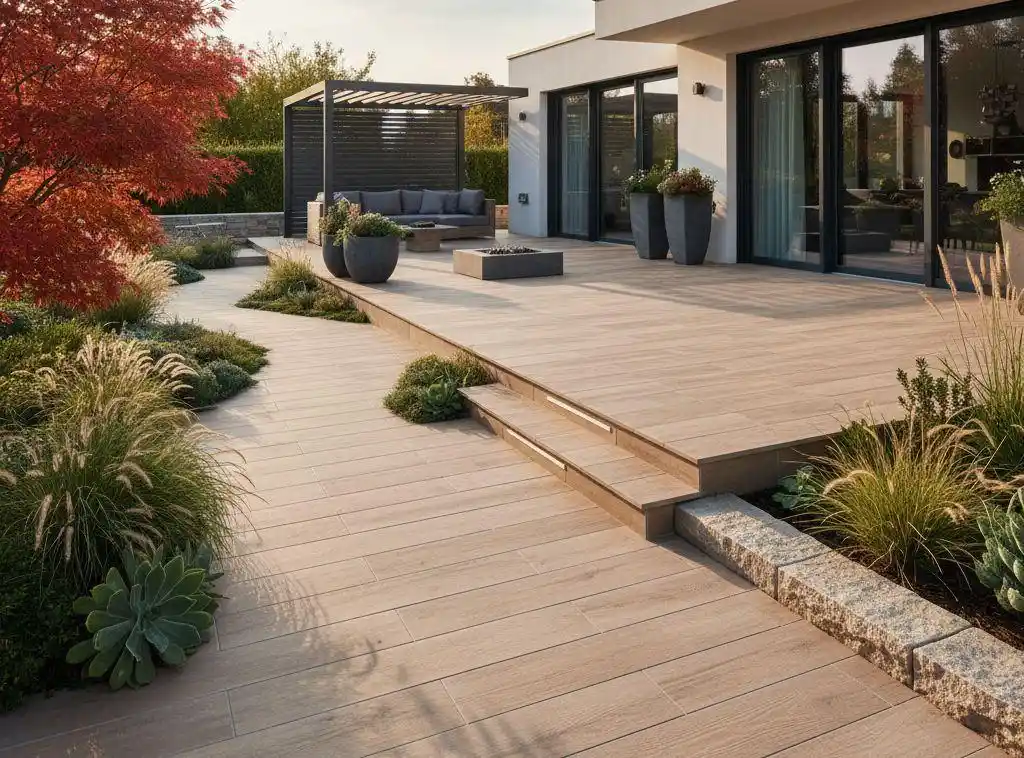
4. Wood-Look Outdoor Tiles
Wood-effect tiles offer the visual warmth of timber with the practical characteristics of a tile product.
They can be used to create a deck-inspired appearance without relying on natural timber boards. Long plank formats can visually complement garden furniture, pergolas and landscaped surroundings.
Design benefits:
- Natural wood-inspired colours and patterns.
- Contemporary plank-style layouts.
- A coordinated appearance with outdoor furniture.
- Options that complement both modern and traditional homes.
Best applications: Covered patios, selected terraces, outdoor seating areas and exterior spaces where the manufacturer approves the product.
Choose an exterior-rated finish rather than assuming that an indoor wood-look tile can be used outdoors.
5. Concrete-Look Outdoor Tiles
Concrete-look tiles are popular in contemporary architecture because they create a simple, understated and modern appearance.
They work well with minimalist furniture, metal details, glass railings, landscaped gardens and neutral exterior colour schemes.
Why choose concrete-look tiles?
- Clean and contemporary appearance.
- Neutral colours that complement different materials.
- Options for large-format layouts.
- Suitable designs for modern residential and commercial projects.
Best applications: Contemporary patios, terraces, verandahs and selected commercial outdoor areas.
6. Two-Centimetre Porcelain Pavers
Two-centimetre porcelain pavers are a specialised category of thicker outdoor porcelain products. They are designed for particular exterior installation systems and can offer more flexibility than standard indoor tile formats.
Depending on the product and system, these pavers may be installed over approved pedestal supports, compacted gravel or other specified bases.
Potential advantages:
- Specially designed for certain exterior installation systems.
- Useful for selected raised terrace and landscape projects.
- Can support a coordinated indoor-outdoor design.
- Available in a variety of outdoor-inspired finishes.
Best applications: Approved raised terrace systems, selected patios, garden pathways and outdoor areas designed around compatible installation methods.
A 20 mm tile is not automatically suitable for every deck or base. Confirm the manufacturer’s installation instructions, load requirements, substrate preparation and applicable product standards. Pedestal installations in particular need an appropriately designed support system.
How to Choose the Right Tiles for Your Outdoor Patio
Selecting the right patio flooring begins with understanding how the space will be used.
1. Consider the Local Weather Conditions
Outdoor tiles may experience intense sunlight, heavy rain, dust and seasonal temperature changes.
For homes in Bangalore and other parts of India, monsoon exposure and regular outdoor moisture should be considered when selecting exterior flooring.
Check whether the tile is approved for the expected environmental conditions. In locations where freezing temperatures occur, frost-resistance information may also be important.
2. Check Slip Resistance
Safety should be a major consideration when selecting outdoor flooring.
Patios, garden entrances and terraces can become wet during rain or cleaning. Look for manufacturer-declared suitability for exterior wet applications and review the relevant test information.
Consider the specific use of the area. A pool surround, sloped pathway and level covered patio may require different surface characteristics.
3. Select an Appropriate Tile Thickness
Tile thickness should be selected according to the intended installation system.
Standard tiles may be suitable for certain bonded installations over prepared concrete bases. Thicker porcelain pavers may be designed for specific pedestal, gravel or other unbonded installation systems.
Do not select a tile thickness simply because it appears stronger. Confirm the required support, load capacity and installation method with the manufacturer and installer.
4. Choose Colours That Suit the Environment
Outdoor flooring should complement the exterior walls, garden, furniture and surrounding landscape.
Consider these colour directions:
- Beige and sand: Create a warm, relaxed outdoor atmosphere.
- Light grey: Works well with modern architecture and minimalist furniture.
- Charcoal: Creates a bold, contemporary appearance.
- Natural stone shades: Complement gardens and landscaped spaces.
- Wood-inspired tones: Add warmth to patios and deck-style layouts.
Also consider how much direct sunlight the floor receives. Dark surfaces can become hot underfoot in direct sun, especially in barefoot areas.
5. Think About Cleaning Requirements
Outdoor surfaces can collect soil, leaves, dust, algae and other debris.
A very heavily textured tile may require more effort to clean than a gently textured finish. Consider the location, surrounding vegetation and how frequently the floor will be maintained.
Ask the manufacturer for recommended cleaning products and methods.
6. Plan for Drainage
Good drainage is essential for outdoor flooring.
The base should be designed with an appropriate slope towards the intended drainage points. Avoid installation layouts that allow water to collect near doors, walls or other vulnerable areas.
Waterproofing, drainage outlets, movement joints and the complete exterior flooring system should be planned before installation.
Best Outdoor Tiles for Different Areas
Different outdoor spaces have different requirements. Here is how to approach tile selection for common residential applications.
1. Garden Patios
A garden patio is often used for relaxing, entertaining guests and enjoying outdoor meals.
Stone-look and concrete-look porcelain tiles can create a refined appearance while complementing plants and garden furniture.
Consider:
- Exterior wet-use suitability.
- A surface finish appropriate for the expected conditions.
- Furniture and foot-traffic requirements.
- Drainage and cleaning.
- Coordination with garden landscaping.
2. Outdoor Deck Areas
Decks can be designed as extensions of indoor living spaces. They may be located beside a swimming pool, garden, terrace or outdoor entertainment area.
Wood-effect tiles can create a timber-inspired aesthetic, while stone-look designs offer a more architectural appearance.
If you are planning a raised deck, confirm that the tile and support system are compatible. Do not place ordinary floor tiles on an unsupported frame or assume that a tile can bridge gaps between deck supports.
3. Balcony Flooring
Balconies are valuable outdoor spaces in apartments and urban homes. The right flooring can help turn a small balcony into a comfortable seating or garden area.
Choose a tile designed for the expected exposure to rain and sunlight. Pay particular attention to waterproofing, drainage and the structural load capacity of the balcony.
4. Terrace Flooring
Terraces offer opportunities for outdoor dining, seating, gardening and entertaining.
Consider porcelain pavers or other exterior-rated tiles suitable for the chosen installation system. Large-format designs can create a spacious appearance, while smaller formats may help with more complex layouts.
The waterproofing membrane, drainage design, movement joints and support system must be checked before installation.
5. Outdoor Walkways
Walkways connect different parts of the property and may experience frequent foot traffic.
Choose a product suitable for the expected weather and pedestrian use. For slopes, steps and exposed entrances, check the manufacturer’s guidance for the specific conditions.
Popular Outdoor Patio Tile Design Ideas
The right tile design can make a patio feel like a natural extension of the home’s interior.
1. Modern Minimalist Patio
Use neutral grey, beige or concrete-inspired tiles with simple outdoor furniture and clean architectural lines.
This style works particularly well with contemporary homes and uncluttered garden designs.
2. Natural Stone-Inspired Patio
Stone-look tiles can create an earthy and relaxed outdoor environment.
Combine natural shades with greenery, timber furniture and warm exterior lighting to create a welcoming seating space.
3. Wood-Effect Deck Design
Wood-look plank tiles can create a deck-inspired layout. Pair them with neutral cushions, planters and subtle lighting.
4. Large-Format Contemporary Terrace
Large-format exterior tiles can reduce the visual number of joints and create a clean, spacious appearance.
Ensure that the tile size is compatible with the slope, drainage, substrate and installation method.
5. Indoor-Outdoor Continuity
Choose related colours or patterns for the indoor living area and outdoor patio. This creates visual continuity and can make the transition between the spaces feel more natural.
If using different products indoors and outdoors, verify that each finish is suitable for its respective application.
Important Installation Considerations for Outdoor Tiles
Even a well-selected outdoor tile can fail if the installation is not properly planned.
1. Prepare the Base Correctly
The substrate should be stable, clean and suitable for the selected installation system. Any structural movement, cracks or drainage issues should be addressed before tiling.
2. Use Suitable Exterior Installation Materials
Select adhesives, grouts and other installation products designed for the particular outdoor conditions and tile type.
Follow the manufacturer’s instructions for application, curing and movement joints.
3. Plan Waterproofing and Drainage
Terraces and balconies above occupied spaces require particular care with waterproofing.
The waterproofing system should be designed and installed correctly before the final tile layer is applied. Drainage should prevent water from accumulating or entering vulnerable building areas.
4. Allow for Movement
Exterior surfaces experience changes in temperature and moisture. Appropriate movement joints and perimeter details help accommodate expected movement.
The spacing and design should follow the applicable installation guidance and project conditions.
5. Use an Experienced Installer
Outdoor installations can involve more complex requirements than ordinary interior flooring.
Work with a qualified installer who understands the selected tile, substrate, waterproofing, drainage and installation system.
Common Mistakes to Avoid When Choosing Outdoor Tiles
Before purchasing tiles, watch out for these common mistakes:
- Choosing indoor tiles for outdoor use: Not every indoor tile can withstand exterior conditions.
- Ignoring slip resistance: A decorative tile may not be suitable for a wet patio or exposed terrace.
- Selecting the wrong thickness: Tile thickness must match the approved installation system.
- Overlooking drainage: Standing water can create maintenance and safety problems.
- Ignoring direct sunlight: Dark outdoor floors may become uncomfortable to walk on barefoot.
- Choosing difficult-to-maintain textures: Deep surface structures can collect dirt and organic debris.
- Skipping waterproofing checks: Especially on balconies and terraces, the complete flooring system matters.
- Assuming all porcelain tiles are identical: Different products have different technical specifications and intended uses.
How to Maintain Outdoor Patio and Deck Tiles
Regular maintenance helps preserve the appearance of outdoor flooring.
Sweep Away Dust and Debris
Remove loose dirt, leaves and soil regularly. This is particularly important in garden patios and outdoor walkways.
Clean with Suitable Products
Use cleaning products recommended by the tile manufacturer. Avoid unapproved acidic or abrasive cleaners that could damage the tile, grout or surrounding materials.
Prevent Organic Build-Up
Moist outdoor environments can encourage algae and other organic growth. Clean affected areas promptly using suitable methods.
Check Grout and Joints
Inspect grout joints, perimeter joints and movement joints periodically. Repair damaged sections using compatible products.
Keep Drainage Points Clear
Remove leaves and debris from drainage outlets to help water flow away from the tiled area.
Inspect the Installation
Look for loose tiles, cracks, damaged grout or water accumulation. Arrange professional repairs where necessary.
Why Explore Outdoor Tile Collections at HEMNIL Tiles Studio?
The right outdoor flooring can transform an ordinary patio, terrace or garden seating area into a distinctive part of your home.
At HEMNIL Tiles Studio, Bangalore, homeowners, architects and interior designers can explore curated tile and surface collections for residential, hospitality and commercial spaces.
From contemporary surfaces to natural-inspired designs, the studio offers options to help coordinate indoor and outdoor environments.
Whether you are planning a garden patio, an outdoor deck-style area, a balcony upgrade or a complete terrace renovation, consider the visual design alongside the product’s technical suitability.
Explore the HEMNIL product collections and discover the outdoor tile options.
For personalised guidance, visit the HEMNIL showroom in Sadashivanagar, Bangalore, or contact the HEMNIL team to discuss your project.
Frequently Asked Questions About Outdoor Patio and Deck Tiles
1. Which tiles are best for outdoor patios?
Exterior-rated porcelain tiles are a popular option for outdoor patios because suitable products can offer low water absorption, durability and a variety of design choices. Always check the manufacturer’s exterior-use and slip-resistance specifications.
2. Are porcelain tiles suitable for outdoor decks?
Some porcelain tiles are suitable for outdoor deck applications. Standard tiles and thicker porcelain pavers may require different installation systems, so confirm the product specifications and approved installation method before buying.
3. What thickness is best for outdoor patio tiles?
There is no single thickness that works for every outdoor project. Standard tiles may be suitable for approved bonded installations, while 20 mm porcelain pavers are designed for certain exterior applications such as specified pedestal or loose-laid systems.
4. Are textured tiles better for outdoor areas?
Textured finishes can be useful for outdoor floors exposed to moisture, but appearance alone does not establish slip resistance. Check the manufacturer’s testing information and declared suitability for the intended conditions.
5. Can outdoor tiles withstand rain?
Some tiles are manufactured and tested for exterior use. Their suitability depends on water absorption, surface characteristics, weather exposure and installation quality. Ask for the relevant technical datasheet.
6. Are wood-look tiles good for patios?
Exterior-rated wood-look tiles can create a warm, deck-inspired appearance. Select a product specifically suitable for outdoor use rather than using an indoor decorative tile.
7. What colours are best for outdoor patio flooring?
Beige, light grey, stone-inspired shades and wood-effect tones are popular choices. Consider the exterior architecture, landscaping, furniture and sunlight exposure before selecting a colour.
8. How do I prevent water from collecting on outdoor tiles?
The substrate should be designed with appropriate slope and drainage. Keep outlets clear and ensure that the waterproofing and installation system are correctly specified.
9. Are 20 mm porcelain pavers suitable for terraces?
Some 20 mm porcelain pavers are designed for terraces and specific installation systems, including compatible pedestal or loose-laid applications. Check the manufacturer’s technical specifications, support requirements and installation guidance.
10. Where can I explore premium outdoor tiles in Bangalore?
You can visit HEMNIL Tiles Studio in Sadashivanagar, Bangalore, to explore curated tile collections and discuss design options for your outdoor project.